
What a SaaS PPC Agency Costs

The short version
- Agency retainers are rarely published. Of the two we read this morning, one lists three tiers and the other lists no price at all.
- The retainer is only the first number. The ad spend they expect and the contract length commit you to more than the fee does.
- A flat fee is heavy on a small budget and light on a big one: £149 a month is 13.0 per cent of a £1,149 total and 1.5 per cent of a £10,149 one.
- Below about £1,000 a month of spend, no fee is worth paying, because a week at that budget does not produce enough data to decide anything.
- Atlas is £149 a month, £299 with a professional reviewing every decision, £1,299 for hands-on work. No minimum spend, no minimum term.
Most SaaS PPC agencies will not tell you the price until you have been on a call, which is why the question keeps getting asked. The two public numbers we could verify today sit far apart: one agency publishes three monthly packages, the other publishes none and routes you to a qualification call. The honest answer is a wide range, from a published entry tier in the low four figures a month to a figure you only get by asking, and none of it includes the money that reaches Google.
What a SaaS PPC agency actually charges
You will be quoted in one of three shapes: a flat monthly retainer, a percentage of your ad spend, or a retainer plus a percentage once spend passes a threshold. The flat retainer is the one most likely to be written down, and the only one two agencies can be compared on without a spreadsheet.
Grow-SaaS is a useful example because it does the unusual thing and publishes numbers. Its PPC pricing page, read on 17 September 2026, lists three packages billed monthly: €1,299 for keyword research, three search campaigns and conversion tracking, €1,799 for five search campaigns plus display and remarketing, and €2,499 for a personal account manager, eight search campaigns and fortnightly calls. The same page says the ad budget is not included and must be provided by the client.
Directive Consulting sits at the other end of the market. Its startup page, read the same day, leads with the companies it has worked with rather than a price, and every button goes to an intro call or a qualification step. Third-party roundups still quote a $6,500 a month startup package, and that figure is not on the page today, which is the best argument for reading a price at the source. Our Directive Consulting alternative page puts the two shapes side by side.

The fee is the first of three numbers
Two numbers sit behind the retainer and both commit you to more than it does. The first is the minimum ad spend the agency expects you to bring, because the model only works when there is enough budget to be worth managing. The second is the term, which sets how long you pay before you may change your mind.
Grow-SaaS is specific about both on its own page, read on 17 September 2026. It recommends a minimum monthly ad spend of $1,000 to $5,000, quoted in dollars there, and its FAQ gives a minimum contract period of six months, cancellable thirty days before the end of the month. On the basic tier that is six payments of €1,299 committed before you know whether paid search suits your product, with the media on top.
Neither condition is unreasonable, and the same page notes results typically take two to four weeks to settle, which is honest of it. The problem is arithmetic rather than integrity: a founder new to paid is committing half a year of fees to learn something a fortnight of well-structured spend starts to answer.
What the fee looks like next to your budget
Compare fees as a share of your total outlay, not as a sticker price. At £1,000 a month of ad spend, our own £149 tier is 13.0 per cent of the £1,149 leaving your bank, and the £299 tier is 23.0 per cent of £1,299. Few people selling a subscription do that sum for you.
The same fees read differently further up. At £3,000 of spend, £149 is 4.7 per cent of £3,149 and £299 is 9.1 per cent of £3,299. At £10,000 they are 1.5 per cent of £10,149 and 2.9 per cent of £10,299. A flat fee gets cheaper in percentage terms every time you raise the budget, the exact opposite of a percentage-of-spend deal, where the fee rises because the campaigns are working.
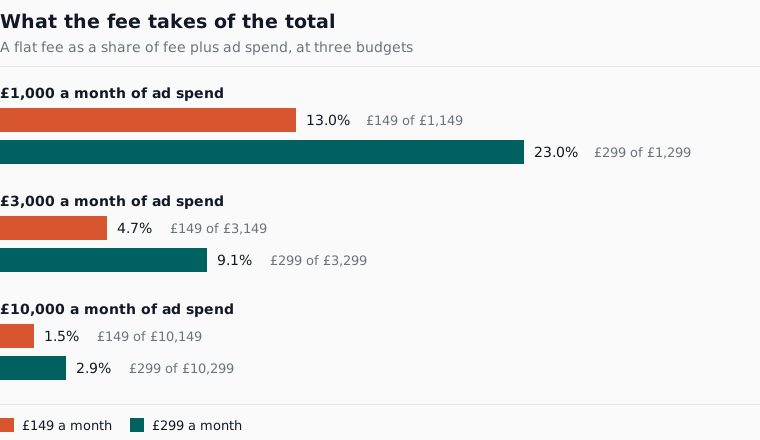
That is the calculation worth doing before any call. Take the fee quoted, add your media budget, and work out the share of the total that never reaches an auction. If it is heading towards a quarter, whoever charges it has to be remarkable to earn the difference.
When an agency is worth the money
An agency earns a five-figure retainer when the work is bigger than the ad account. Positioning, creative production, landing pages, sales and marketing alignment, attribution wired into a CRM: that is several jobs done by specialists, and no subscription replaces it.
The clearest signal that you are ready is having somebody in house to brief them. Directive’s startup page, read on 17 September 2026, lists research and strategy, paid media, SEO, creative, CRO, and reporting inside one engagement, which is a programme rather than a service, and a programme needs an owner on your side of the table. Where nobody holds that job, agency work arrives, gets admired and never gets actioned.
There is a second case nobody likes saying out loud. An agency is worth the money when the founder honestly will not do the work. A neglected £5,000 a month account wastes more in a quarter than most retainers cost, so if the choice is a fee or a drifting account, pay the fee. We have shortlisted the agencies worth a look for a B2B SaaS account separately.

When you do not need one at all
Below about £1,000 a month of ad spend, hire nobody. A week at that budget does not produce enough clicks or conversions to justify changing anything, so you would be paying a professional to wait, and the fee would be a bigger line in the accounts than the media it manages.
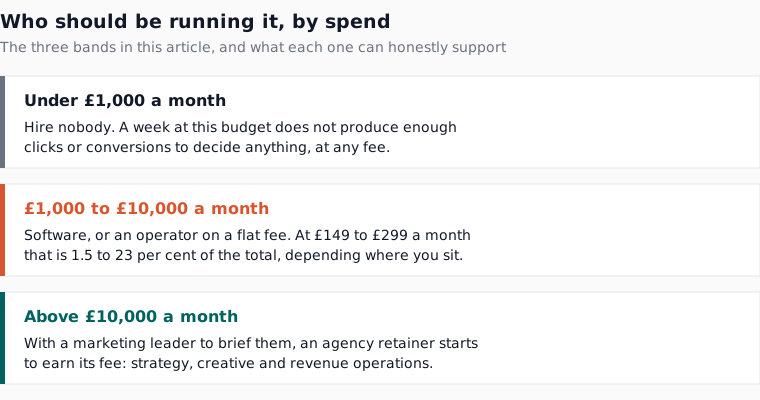
Two other situations need no retainer. One product, sold in one country, to a buyer you can name is a handful of phrase match campaigns on terms your customers type, where the weekly job is reading the search terms report and adding negatives. Having no conversion tracking is the other, and there the first step is measurement rather than management, because paying anyone to optimise towards a number nobody trusts is expensive tidying up.
How we run accounts is a short list of levers checked weekly: search terms into negatives, phrase match by default with exact kept for brand, Standard Shopping before any Performance Max experiment, and never more than doubling a budget inside a month. That list is learnable, which is why the search term analyser and the keyword generator are free with no account, and why our guide to running Google Ads for a SaaS product exists.
What we built instead of a retainer
Atlas sits between doing it all yourself and signing a retainer: £149 a month, £299 with a professional ads manager reviewing every decision, or £1,299 for hands-on work and a monthly strategy call, whatever your ad spend is. There is no minimum spend and no minimum term. The free tier sets up conversion tracking and gives limited use of the tools, though Atlas does not run live ads on it.
Google and Meta are not the same job and we will not pretend otherwise. On Google, Atlas builds the account then manages it week to week, applying changes at the approval tier you set: Full Manual, Smart Auto or Full Auto. On Meta, Atlas builds the campaigns and ships weekly tools you run yourself in a few minutes, because there is no Meta Marketing API integration, and an account that needs you in the loop should be described that way. The AI ads management page sets out a given week.
Capability without control is what should worry you about handing an account to software, so the rails are fixed rather than promised. Campaigns are always created paused. At most thirty negative keywords and five broad match keywords a day. A converting search term is never blocked. Anything Atlas does can be undone within thirty days, and you keep the account, the billing and the final word. Rob Walling of MicroConf put the shape of it better than our own copy does: “Think of it as an agency team in a box.”

Where to start on Monday morning
Work out your total rather than your fee. Add your media budget to whatever anyone asks you to pay, then look at the share that never reaches an auction: 13.0 per cent against £1,000 of spend is a different proposition from 1.5 per cent against £10,000, and that applies to a £2,000 retainer as much as to us.
Then ask two questions before taking a call. What is the minimum ad spend, and what is the minimum term? Those answers move the real price more than the headline does, and if they come back as six months and a budget you have not got, you are not ready for an agency. Finding that out for free is a good morning’s work.
If you would rather see a properly built SaaS account first, Atlas will build yours and show its reasoning. Start free with Atlas, keep the account whatever you decide, and make the hiring call with the structure in front of you.
Questions people ask about this
- Can I cancel Atlas part-way through a month?
- Yes. You can cancel any time in the app, effective at the end of the billing period, so there is no notice to serve. Fees already paid are not refundable, and your data is kept for three months.
- Who owns the Google Ads account, me or Atlas?
- You do, along with the billing. Atlas works inside the access you grant through the Google Ads API, revocable whenever you like. Strategic calls such as new campaigns and big budget shifts still come back to you.
- What does the free tier actually include?
- Conversion tracking setup and limited use of the tools, at no cost. Atlas does not run live ads on the free tier, so treat it as a way to get measurement right and see how a build works before paying for anything.
- Does the price change as my ad spend grows?
- No. The three tiers are flat at 149, 299 and 1,299 pounds a month whatever you spend, so the fee falls as a share of your total as the budget rises. If a price ever changes, you get thirty days of notice.
- Does Atlas manage Meta the same way it manages Google?
- No, and the difference matters. On Google, Atlas manages the account every week at the approval tier you choose. On Meta, it builds the campaigns and gives you weekly tools you run yourself, because there is no Meta Marketing API integration.